


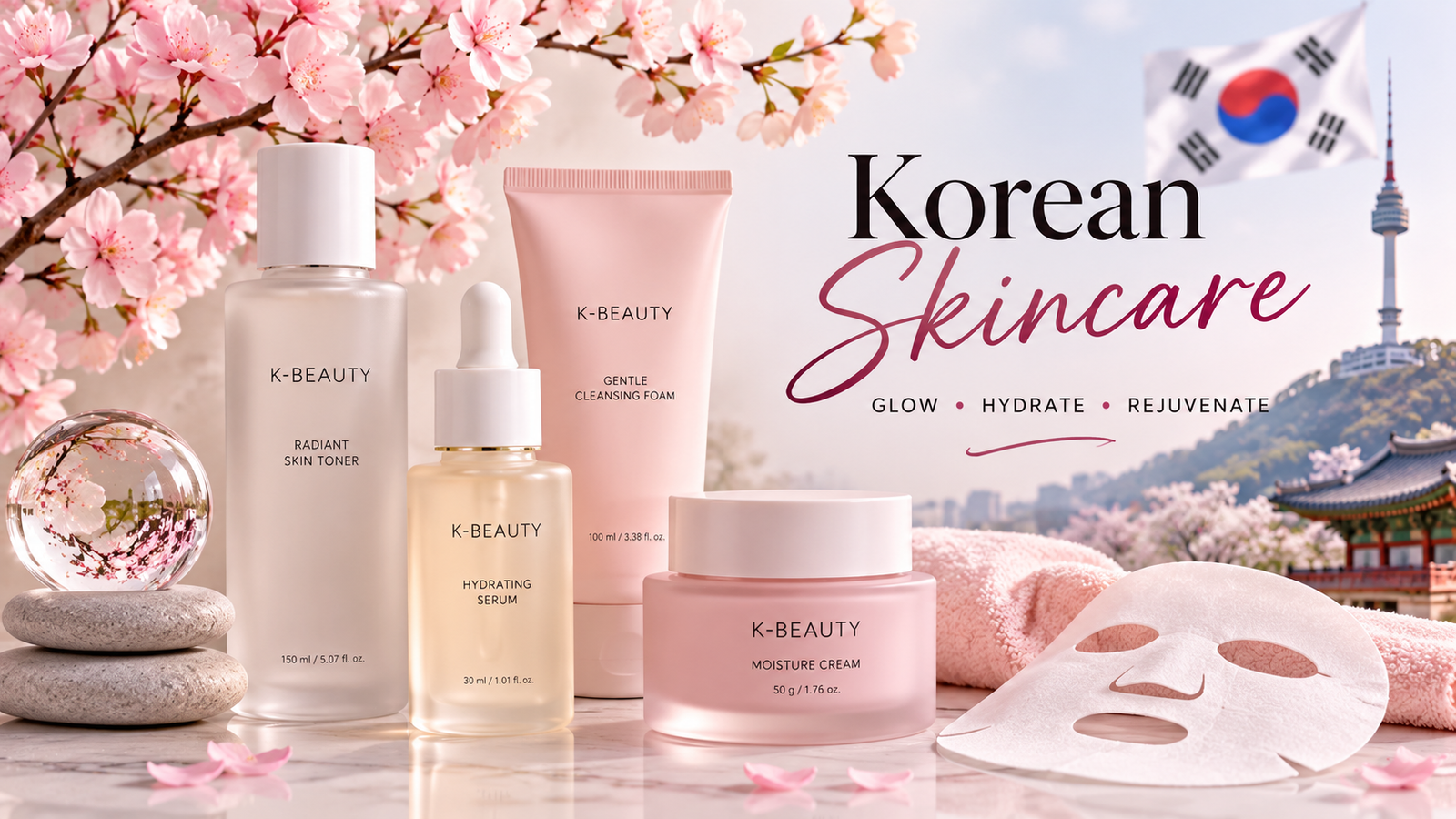
Have you ever caught yourself staring at a K-drama heroine’s complexion more than her actual love interest? She may have just cried on screen for 10 continuous minutes, yet her skin remains entirely flawless—devoid of visible pores or dark spots, radiating a pure, otherworldly luminosity. In that moment, the romantic plot fades into the background, replaced by a single compelling question: “What is she using in her face?”.
This shared realization marks the exact turning point where casual K-drama viewers transform into dedicated K-beauty enthusiasts.
The Ultimate 16-Episode Skincare Ad
K-dramas function as the world’s most effective, unspoken skincare advertisements. They bypass traditional sales pitches entirely, opting instead to weave skincare seamlessly into daily narratives: a calming serum applied in the morning, a generous layer of sunscreen before stepping outdoors, or a sheet mask worn at night during a moment of romantic overthinking. Witnessing this ritual across 16 episodes embeds the routine deeply into the viewer’s subconscious.
Even the term “Glass Skin” owes its origin to the screen. Coined by Korean media editors in the early 2010s, the phrase was invented to describe actors whose complexions looked exceptionally dewy, clear, and seamless on high-definition television screens. Through these broadcasts, global audiences absorbed one fundamental rule: in the world of K-beauty, sunscreen is not an option it is as vital as oxygen.
Decoding the Obsession: Why Asian Consumers are Leading the Charge
The massive surge in K-beauty adoption across Asia is driven by a mix of biological compatibility and a profound cultural shift in beauty ideals.
- Formulated for Shared Climates: The products are designed to combat the exact environmental factors faced by many Asian consumers—high humidity, intense sun exposure, and the stubborn post-inflammatory hyperpigmentation left behind by acne. This shared climate reality is why clinics in Vietnam are flooded with requests for the “glass skin” look, and why consumers in Thailand and China routinely blend Korean regimens with local beauty practices.
- The Shift from ‘Fairness’ to ‘Glow’: For generations, older demographics across South Asia equated beauty strictly with fair skin—a historical bias tying lighter skin tones to a life of leisure away from manual outdoor labor. Korea has fundamentally disrupted this narrative. The modern objective is no longer about bleaching the skin white; it is about achieving chok-chok a state of bouncy, clear, deeply hydrated skin. This cultural pivot is reflected in Asia’s $28 billion brightening and clarity market, which prioritizes radiance over alteration.
- Prevention Over Correction:
- While traditional Western skincare philosophies often wait for signs of aging or damage to appear before treating them, the Korean philosophy prioritizes daily barrier protection, deep hydration, and consistent UV defense. These lightweight, gentle layers were originally formulated to withstand Seoul’s harsh winters and humid summers a versatile blueprint that aligns naturally with changing seasonal demands across the subcontinent.
Simplifying the Routine: A Realist’s Approach
Skincare experts emphasize that achieving a healthy glow does not require a complex, hyper-expensive 10-step routine. The core philosophy can be successfully condensed into just three foundational, high-quality steps:
- A Gentle Cleanser: To remove impurities without stripping the skin barrier.
- A Hydrating Serum: To lock in deep moisture and encourage the chok-chok effect.
- A Reliable Sunscreen: To protect against UV damage and prevent pigmentation.
Once these three critical pillars are established, consumers can easily supplement the remainder of their routines using affordable, high-performing local alternatives.
Ultimately, the global obsession with K-beauty transcends mere aesthetics. While K-dramas introduced audiences to flawless on-screen complexions, they inadvertently taught viewers a broader lesson in self-care. The elaborate routines were never truly about altering one’s identity to look Korean; rather, they carved out a dedicated pocket of time each night exclusively for the individual—a rare interval free from work, obligations, and external stress.
The goal is not to replicate the engineered perfection of a television star. The goal is to cultivate healthy, resilient skin that feels nourished to the touch. By focusing on consistent hydration and daily sun protection, a natural, confident glow becomes attainable for anyone.