


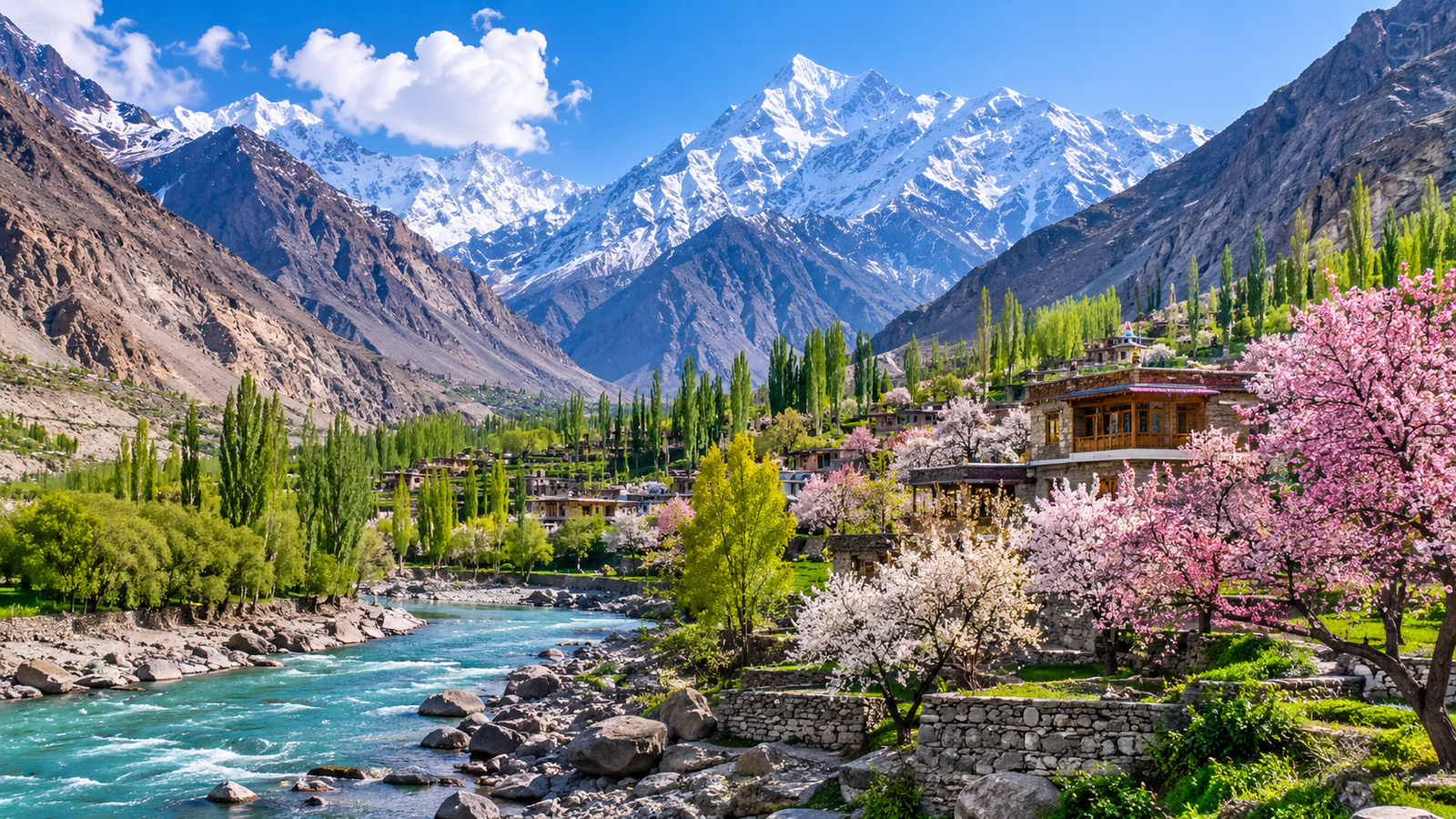
Gilgit Baltistan: The majestic Hunza Valley continues to solidify its reputation as a global tourism hotspot, captivating domestic and international travellers alike with its blend of dramatic landscapes and deep human connection. For decades celebrated for its towering peaks, the valley is increasingly recognized for a travel experience that redefines the relationship between visitors and locals.
Beyond the Peaks: A Cultural Awakening
While the journey along the Karakoram Highway offers breathtaking views of the iconic Passu Cones, Rakaposhi, and the surreal turquoise waters of Attabad Lake, recent travelers report that the true magic of Hunza lies in its community. Tourism operators note a significant shift in visitor feedback, with tourists emphasizing cultural immersion over simple sightseeing.
The valley’s ancient history comes alive at the 700-year-old Baltit and Altit Forts, which offer panoramic views of the valley where ancient kingdoms once ruled. However, it is the remarkable hospitality, low crime rates, and progressive community mindset of the Hunza people that leave the most lasting impression. Visitors are regularly welcomed into local orchards, sharing fresh cherries and apricots while engaging with a community deeply rooted in tradition yet exceptionally progressive in education and gender equality.
A Growing Hub for Diverse Travelers
Hunza’s unique geography—nestled between China’s Xinjiang region and Afghanistan’s Wakhan corridor—has also made it a sanctuary for solo female travelers and adventure seekers. Accommodations are evolving rapidly to meet this diverse demand, ranging from traditional stays like the Hunza Serena Inn to modern luxury eco-resorts built from local stone and wood. Whether catching the sunrise over the Karakoram range from Eagle’s Nest or navigating the winding roads to the frozen frontier of the Khunjerab Pass, travelers consistently describe Hunza not just as a destination, but as an experience that alters their perspective on travel.